


All Products
-
Steel Pipe Nipple
-
Water Tap And Bibcock
-
Steel Pipe Socket
-
Butt Welding Pipe Fittings
-
Stainless Steel Pipe Fittings
-
Steel Pipe And Tube
-
Steel Square Tube And Pipe
-
Flange
-
King Nipples
-
Hose Nipples
-
Pipe Clamp
-
Malleable Iron Pipe Fittings
-
Suction Filter Strainer
-
Brass Pipe Fitting
-
Camlock Fitting & Coupling
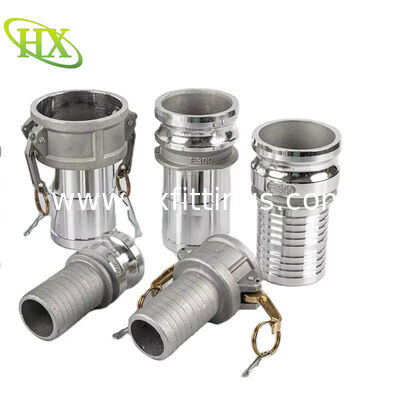
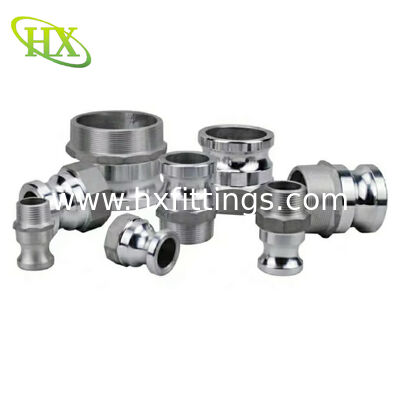
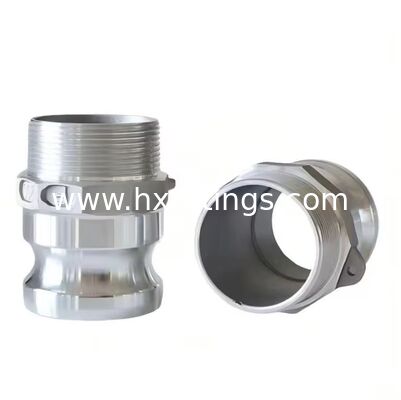
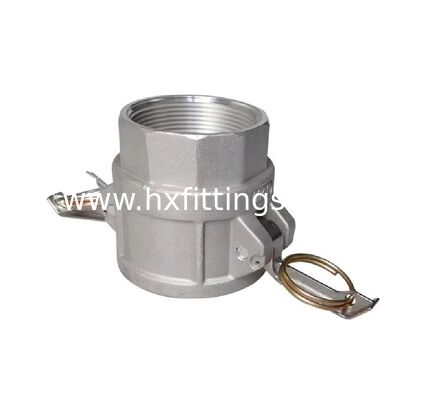
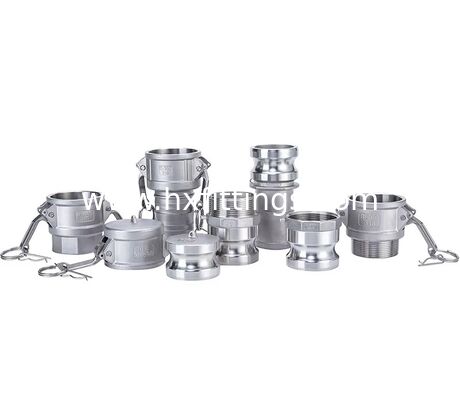
QUICK ALUMINUM CAMLOCK COUPLING FOR LAYFLAT HOSE 1/2 TO 8" CAMLOCK CONNECTOR HIGH PRESSURE SMOOTH SURFACE


Product Details
| Material | ALUMINUM |
|---|
Product Description

Quick Aluminum Camlock Coupling for Layflat Hose: 1/2" to 8" High-Pressure Connectors with Smooth Surface
Layflat hose is the backbone of high-volume water transfer—from agricultural irrigation and mine dewatering to temporary bypass lines and emergency drainage. The coupling that connects that hose to the pump, manifold, or adjacent hose determines whether the system runs dry and efficient or leaks under pressure. Aluminum camlock couplings in sizes from 1/2 inch to 8 inches offer the combination of quick tool-free connection, lightweight handling, and adequate pressure capacity for most layflat discharge applications. This guide covers the selection, pressure ratings, and installation essentials for specifiers and operators.
Why Aluminum for Layflat Hose Systems?
Layflat hose deployments involve frequent setup and breakdown, often across rough terrain and under time constraints. Aluminum camlock fittings address the two biggest operational pain points: weight and speed.
Aluminum is significantly lighter than stainless steel or brass, a difference that becomes decisive at 3-inch diameters and above where manual handling of a discharge line may involve dozens of fittings. The material also offers good corrosion resistance for water service and is compatible with PVC layflat hoses, suction hoses, and other low-pressure discharge lines.
The standard governing interchangeability is A-A-59326 (formerly MIL-C-27487), which ensures that aluminum camlocks from different compliant manufacturers mate correctly in sizes from 1/2 inch through 6 inches. The 8-inch size is available but not universally standardized—suppliers may differ in coupling dimensions, so verifying the specific manufacturer’s specification is advisable when building an 8-inch system.
Pressure Ratings by Size: What to Expect
Pressure capacity decreases as coupling diameter increases. Published ratings for aluminum camlock fittings at 70°F provide a reliable planning baseline, though exact values vary by manufacturer and configuration.
| Size | Typical Maximum Working Pressure (Aluminum) |
|---|---|
| 1/2" – 1-1/2" | 250 PSI |
| 2" | 250 PSI |
| 2-1/2" | 150 PSI |
| 3" | 150 PSI |
| 4" | 100–150 PSI |
| 5" | 75 PSI |
| 6" | 75 PSI |
| 8" | 50 PSI |
Source: representative aluminum camlock ratings at 70°F. Values for hose-shank configurations may be governed by the clamp type rather than the camlock body.
For layflat hose assemblies, the pressure limit is often set by the hose-to-shank connection rather than the camlock itself. Standard screw-style hose clamps typically limit the assembly to approximately 50 PSI. Higher-pressure layflat systems require banding with stronger clamps and a tensioning tool, or crimped/serrated ferrules for a permanent connection.
Critical safety restriction: Camlock couplings must never be used for compressed air or steam service. The cam arm mechanism can release under pressure if subjected to forces outside its design intent.
Selecting the Right Camlock Type for Layflat Hose
Layflat hose connections typically use two configurations:
Type C (Female Coupler × Hose Shank) is the primary choice for attaching a layflat hose to a camlock system. The hose shank (barb) inserts into the hose bore and is secured with clamps. The female coupler end accepts any compatible male adapter. This is the most common fitting for the hose end of a layflat discharge line.
Type E (Male Adapter × Hose Shank) is used on the opposite end of a hose fitted with Type C, enabling hose-to-hose connections. When one hose carries a Type C and the next carries a Type E, they connect directly without additional adapters.
Type A (Male Adapter × Female Thread) and Type F (Male Adapter × Male Thread) are used at the pump or manifold end to adapt a threaded port to the camlock system. Choose A for male pipe ports, F for female pipe ports.
For layflat systems, a common assembly is: Type F or A at the pump outlet, layflat hose with Type C on one end and Type E on the other, then Type C or D at the discharge point.
Smooth Surface: Why It Matters
The “smooth surface” specification refers to the internal bore of the coupling and the external finish of the casting. A smooth internal bore reduces turbulence and pressure loss at the connection point, which is particularly relevant for high-flow layflat applications where every psi of head loss translates to reduced delivery volume or increased pump fuel consumption.
External surface finish also affects performance in the field. A smooth casting resists the accumulation of mud, fertilizer residue, and debris that can interfere with cam arm operation. Rough or porous castings may trap contaminants that accelerate wear on the sealing surfaces and cam mechanism.
Quality aluminum camlocks are typically gravity die-cast or investment-cast with machining on critical surfaces—the gasket seat, the cam groove, and the thread. Specifiers should confirm that the sealing face and cam groove are machined rather than as-cast, as machining tolerance directly affects seal reliability and interchangeability.
Installation Best Practices for Layflat Hose
Proper installation prevents the two most common failure modes: coupling blow-off and leaks at the shank.
Square-cut the hose. Use a heavy-duty hose cutter to make a perpendicular cut. A diagonal or jagged cut causes uneven clamping pressure and creates a leak path.
Insert the shank fully. Apply soapy water or a compatible lubricant to the barb, then push the shank into the hose until the hose bottoms out against the collar. Partial insertion is the leading cause of blow-off under pressure.
Use appropriate clamps. For standard layflat discharge service, double-bolt heavy-duty segment clamps (interlocking clamps) provide secure retention. Position clamps behind the shank barbs. For higher pressures, hydraulic crimping or swaging is recommended.
Inspect cam arms and gaskets before each connection. The cam arms should close by hand with resistance. If they close too easily, the fitting may be worn or the wrong size. A hardened or damaged gasket will not seal reliably and should be replaced.
Frequently Asked Questions
Q: Can aluminum camlock couplings be used with PVC layflat hose?
Yes. Type C and Type E aluminum camlocks with hose shanks are commonly used with PVC layflat, suction, and braided hoses. Secure the shank with appropriate clamps for the pressure rating of the hose.
Q: What is the largest aluminum camlock size available?
Aluminum camlocks are available in sizes up to 8 inches. However, the 8-inch size is not universally standardized under A-A-59326, so confirm dimensional compatibility with your supplier before mixing brands.
Q: What pressure can a 4-inch aluminum camlock handle?
Typical ratings for 4-inch aluminum camlock fittings are 100 to 150 PSI at 70°F, depending on configuration. The hose shank connection and clamp method may further limit the assembly pressure.
Q: Are smooth-surface camlocks worth the extra cost?
For high-flow or high-cycle applications, yes. Machined sealing surfaces and smooth bores improve seal life, reduce pressure loss, and resist debris accumulation that can jam cam arms. For occasional low-pressure use, standard cast finish is adequate.
Q: Can I mix aluminum and stainless steel camlocks on the same layflat line?
Yes, provided both conform to A-A-59326 and are the same size and type. They will mate and seal. However, in saline or highly conductive water, galvanic corrosion at the dissimilar metal interface may accelerate over time.
Recommended Products